
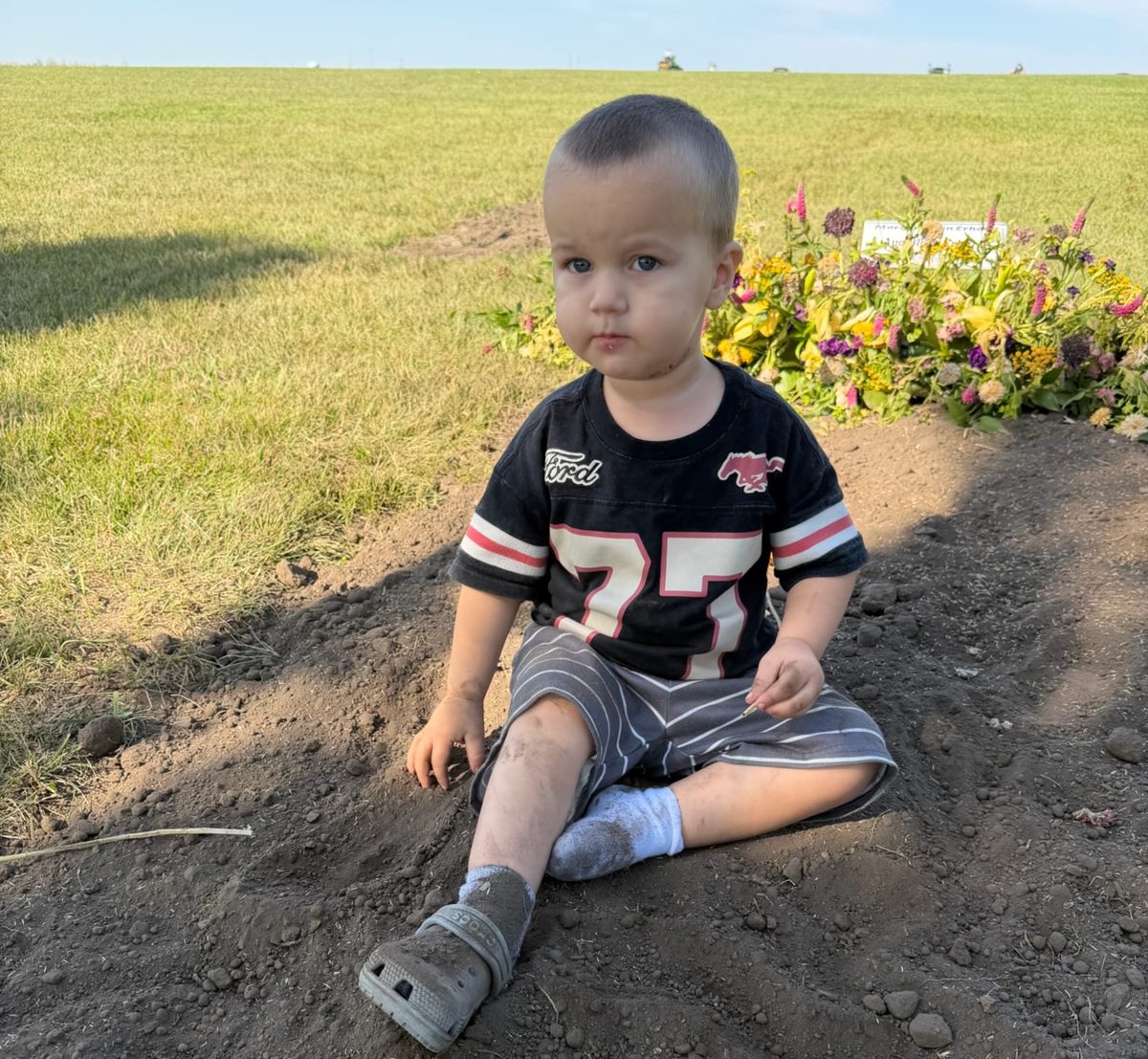
Cameron Erhart says Child Protective Services had been involved with his family long before the Aug. 6 attack in Mandan. He says Kailey had threatened to kill herself and the children, a safety plan lasted only a few months, and later threats left him afraid to call police. After two children were killed and a third seriously injured, CPS removed the surviving toddler from his care. Now Cameron is speaking publicly about what he believes went wrong before and after the tragedy.
MANDAN, N.D. — Cameron says he decided to speak publicly because too many people were forming conclusions about him without knowing what had happened behind the scenes.
“There was a lot of misinformation that’s being spread around at the moment. I feel like a lot of the confusion, it’d be nice to clear some of that out.”
– Cameron Erhart
On Aug. 6, three young children were attacked inside a Mandan home. Two died. The third survived after undergoing emergency surgery.
Their mother, Kailey Erhart, faces criminal charges stemming from the attack. The criminal case remains pending, and Erhart is presumed innocent unless and until proven guilty.
Much of the public discussion afterward has focused on Cameron. Did he do enough to protect his children?
Cameron says the public does not know exactly what happened during his family’s earlier involvement with CPS, what Kailey had threatened, or why he says he eventually felt trapped and afraid of what could happen if he called authorities.
Four days after the attack, as Cameron expected to finally take his surviving son home from the hospital, CPS instead took custody of the child.
“I had to walk him out of the hospital into their vehicle,” Cameron said.
But Cameron says the story of what happened with CPS began much earlier.
“They failed me and my children”
Cameron says CPS had been involved with his family well before Aug. 6.
According to Cameron, Kailey had threatened to kill herself and the children if he contacted police, telling him she could do it before officers ever arrived. Cameron says he believed those threats.
Because he feared that calling police himself could trigger the very thing Kailey was threatening, Cameron says he instead disclosed what was happening to his therapist and, through her, found what he believed was a safer way to contact CPS about the threats. His therapist then contacted CPS on his behalf.
Cameron says CPS workers then came to the home and interviewed both parents. According to Cameron, Kailey admitted to CPS that she had made threats involving killing herself and the children.
Cameron expected a much stronger intervention.
“I feel like they failed me and my children,” Cameron told 701 Report.
His account that CPS knew about earlier threats is also reflected in the public criminal affidavit, which states that Cameron told investigators after the attack that Kailey had previously made comments about killing herself and the children and that CPS had been aware of those comments.
Cameron says CPS later became more involved after a separate incident involving a firearm and police. Kailey received mental-health treatment, and CPS implemented a safety plan.
But Cameron says the plan was minimal. According to him, it lasted only a few months and involved only a few supervised visits, during which Kailey could see the children with another adult present.
To Cameron, even that was not enough. Given the threats he says Kailey had already made — and admitted making to CPS — Cameron believed she should not have been permitted contact with the children at all after threats of that nature.
“What I feel like should have been done is that Kailey needed to be removed from the kids completely at that time.”
– Cameron Erhart
After only a few months, Cameron says the restrictions ended and the earlier CPS involvement effectively came to a close. He says Kailey received psychiatric treatment and appeared more stable for a period.
But Cameron says CPS’s earlier response still never matched the seriousness of what the agency had been told. In his view, CPS did intervene. It simply did not do nearly enough.
The threats returned
Cameron says there was a period when things appeared more stable. Later, he says, Kailey again began making threats.
And according to Cameron, the threat was the same: if he contacted police, she could kill the children and herself before officers arrived. That fear, combined with his previous experiences with CPS and police, left him feeling as though he had no safe option.
“That’s where I just felt stuck,” Cameron said.
In his interview, Cameron said he feared that even if authorities intervened, the result would again be temporary and the situation would eventually return to where it started.
A recording made after the tragedy also captures Cameron directly challenging CPS workers over whether they had reviewed his previous efforts to seek help. He asked about his calls to CPS and also referenced his contacts with police officers and therapists.
“There’s been hundreds of times that I’ve tried. Everybody’s failed to help me.”
– Cameron Erhart, to CPS
The recording itself shows Cameron specifically asking CPS whether workers had reviewed how many times he had contacted the agency, while also referencing police and therapists. Cameron later clarified to 701 Report that he was referring to repeated attempts to reach CPS, which he says often went unanswered.
“I tried everything within my power”
Cameron has faced criticism from people questioning whether he did enough to protect his children. His response is direct.
“I tried everything within my power to protect them kids. Every little thing I could have done. I just spent hours trying to get Kailey to calm down into the place where the kids were safe.”
– Cameron Erhart
During the attack, Cameron says he also tried unsuccessfully to force his way back inside the home.
“I tried everything that I possibly could to get back into the house and nothing was working,” Cameron said. “I couldn’t get through any of the windows. I tried to break the windows and go through. I tried to kick down doors and nothing was working.”
Cameron says those efforts unfolded in a short period of time. Cameron says 911 had already been called before the children were harmed inside the home.
People examining his decisions afterward, he says, have the benefit of knowing how the story ended. He did not.
Four days later, CPS took his surviving son
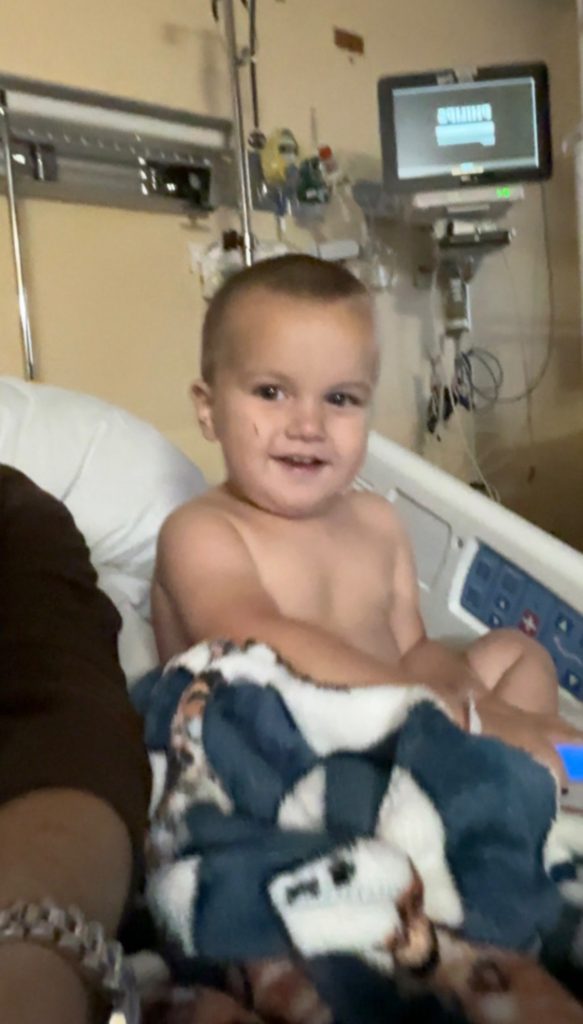
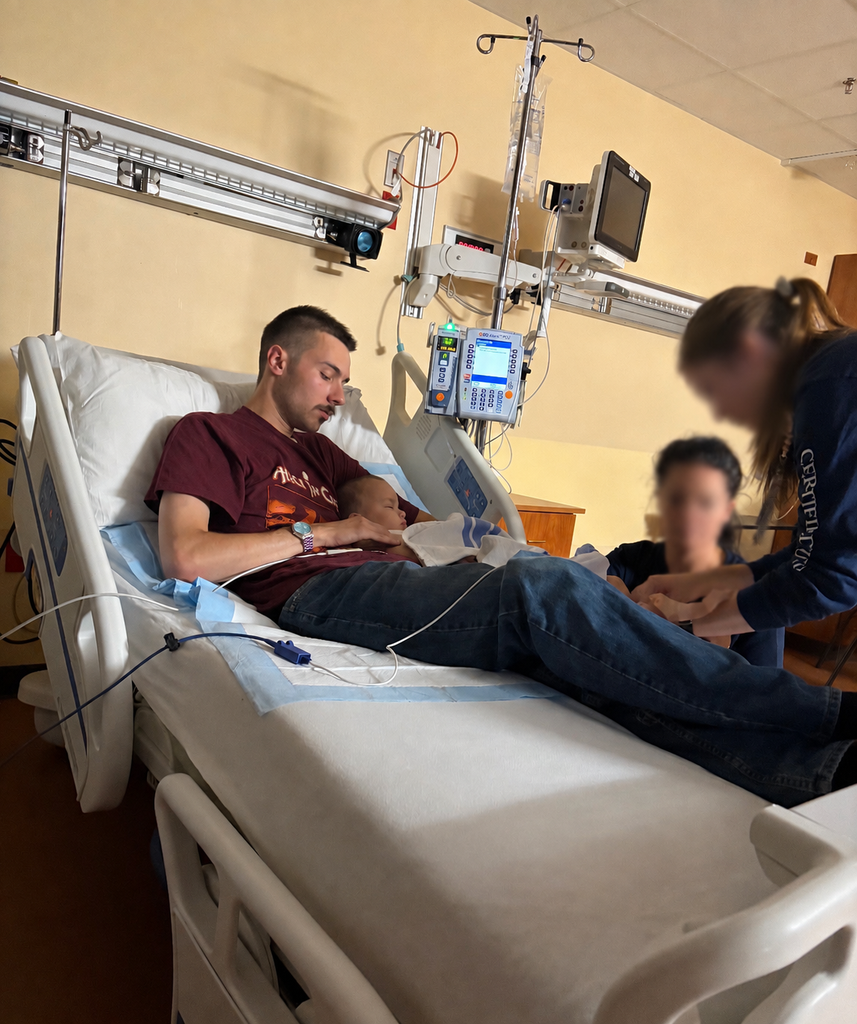
After the attack, Cameron stayed at the hospital with his surviving son while the toddler recovered from emergency surgery.
“I sat with him just about every single day for every minute, just being there supporting him and holding him,” Cameron said.
CPS also had contact with Cameron during the hospital stay. Then came the day his son was being discharged. Cameron says workers took him into another room and told him CPS was taking custody.
According to Cameron, workers raised concerns about whether he had adequately protected the children and whether his own trauma left him emotionally prepared to care for his surviving son. A recording of the encounter captures workers discussing Cameron’s mental well-being and what they described as a pattern of “failure to protect.”
For Cameron, that accusation was particularly difficult to accept given what he says happened during the family’s earlier involvement with CPS.
“Having my last surviving child taken away from me in my arms, as he was being discharged from the hospital, was one of the worst feelings that I could even imagine.”
– Cameron Erhart
Family members were offered
Before placing the child in foster care, CPS asked Cameron for relatives who might be able to care for his son.
Recordings provided to 701 Report show Cameron giving workers several names and contact information, including relatives he said knew the children and had cared for them before. Cameron says he believed there were family-placement options available.
Instead, he says his son was ultimately placed with foster caregivers the child did not know.
“They just strictly placed him straight into a foster home that same night without reaching out to anybody else in my family,” Cameron said.
A later recorded conversation gives additional context for CPS’s reasoning. A worker told Cameron that a therapist believed the child could benefit from what she described as a “neutral placement” — away from other people processing the same traumatic event — while father and child began healing.
Cameron disagreed. After his son had lost siblings, undergone emergency surgery and been moved through unfamiliar environments, Cameron believed separating him from his father and family created additional trauma.

“Your family did have a disservice done to them”
One of the most significant moments in Cameron’s recordings came during another conversation with a CPS worker involved after the attack.
Cameron asked whether CPS was now being especially cautious because of how his family’s earlier case had been handled. The worker denied that the current decision was an attempt to compensate for the earlier case. But she also acknowledged that she would have approached the prior matter differently.
After discussing differences between Human Service Zones, the worker told Cameron:
“I feel like your family did have a disservice done to them.”
– CPS worker, in a recording provided to 701 Report
That statement does not establish that CPS caused or could have prevented the Aug. 6 attack. It cannot establish what would have happened had different decisions been made. But it does show that at least one worker within North Dakota’s child-welfare system believed the family’s earlier case could have been handled differently.
For Cameron, that is difficult to reconcile with what happened afterward. He believes CPS’s response before the tragedy was inadequate even after Kailey had allegedly admitted making threats involving the children. Then, after two children were dead, one of CPS’s strongest actions was to separate Cameron from his surviving son.
Was CPS justified in being extremely cautious?
There is an obvious counterargument.
Two children had just died. A third had been seriously injured. CPS was confronting an extraordinary family tragedy and had to determine where the surviving child would be safest.
701 Report put that argument directly to Cameron’s attorney, Patrick Waters.
“You know, that’s a fair question,” Waters said.
But Waters argues CPS had also spent several days watching Cameron beside his son in the hospital. “Cameron was at that hospital with his child the entire time,” Waters said. He said Human Services had the opportunity to observe Cameron caring for his son throughout the child’s recovery.
“The child was safe, the child was with the father, and the child was ready to go home. And instead of sending that child home with the dad, they sent him to a complete stranger.”
– Patrick Waters, attorney for Cameron
Waters has also stopped short of portraying this case as proof that CPS generally acts improperly. “The majority of the time CPS gets it right,” Waters told 701 Report. But when serious mistakes occur, he said, the decisions deserve scrutiny.
The juvenile case
A juvenile proceeding followed CPS’s removal of the child. Those proceedings are confidential.
For that reason, 701 Report is not publishing the juvenile court order, testimony or specific details of what occurred during the shelter-care proceeding.
Cameron has said the case was dismissed and his son was returned to him. Beyond that high-level outcome, 701 Report is not publishing details from confidential juvenile proceedings, hearings or orders.
“The resources are out there.” Cameron says he had already tried to use them.
The case also raises questions about public messaging that followed the Mandan deaths.
On Aug. 13, the Bismarck Tribune published coverage highlighting resources available to families in crisis, including Human Service Zones and North Dakota’s Baby Safe Haven program. North Dakota Health and Human Services provided information used in that reporting.
The timing caught 701 Report’s attention.
701 Report asked HHS whether the department, a Human Service Zone or an employee had initiated, suggested or pitched the Tribune coverage and separately submitted an open-records request seeking communications between HHS employees and Tribune reporter Nathan Price or other Tribune staff from Aug. 7 through Aug. 13.
HHS Public Affairs Officer Jennifer Skjod said the department found “absolutely no emails, text messages, Microsoft Teams messages, or other written electronic communications” between HHS staff and Price or other Bismarck Tribune employees during that period.
That response is important. The records inquiry did not uncover evidence that HHS electronically pitched or coordinated the Tribune stories. HHS’s search was limited to written electronic communications, however, so the response does not establish whether any telephone or other verbal communication occurred.
There is also nothing inherently improper about a state agency providing information about services available to families in crisis.
But the coverage creates a difficult contrast with Cameron’s account. The message after the tragedy was that resources were available. Cameron says his family had already interacted with those systems.
His therapist had contacted CPS. CPS had investigated. A safety plan had been implemented. Police had previously become involved.
And Cameron says that when the threats later returned, his experience with those earlier interventions — combined with Kailey’s alleged threat to kill the children before police arrived — left him afraid to call police directly.
The question is therefore not simply whether resources existed. It is: what happened when this family tried to use them?
HHS cites confidentiality
701 Report also asked HHS to address Cameron’s allegations directly. Questions included what safety concerns led to the removal of Cameron’s surviving son, whether HHS disputes Cameron’s account of earlier CPS involvement, how relative placement was considered and whether alternatives to removal were available.
HHS declined to discuss the specific child-protection case. Skjod provided the following statement:
“Stringent confidentiality laws prevent North Dakota Health and Human Services from disclosing any information related to specific child abuse or neglect cases, as outlined in NDCC 50-25.1-11.”
– Jennifer Skjod, HHS Public Affairs Officer
As a result, HHS has not publicly addressed Cameron’s specific allegations about what CPS knew before Aug. 6 or defended the decision to remove his surviving son on the facts of this particular case. The department has instead said state confidentiality law prevents it from doing so.
A similar records request submitted to Three Rivers Human Service Zone remains pending as of publication. 701 Report will update this story if additional records or information become available.
Colton is home and recovering
Cameron says his surviving son is doing well. In a statement he specifically asked 701 Report to share, Cameron said:
“Colton is doing perfectly fine and is going to make a full recovery. Playing more than ever and happier than ever. He is loving the support and feeling very loved.”
– Cameron Erhart
Cameron also has a message for people continuing to form conclusions about what happened: wait before making assumptions.
“Just wait for more information to be released first,” he said.

Supporting the family
Cameron’s mother, Melissa Erhart, established a GoFundMe following the tragedy. The fundraiser is intended to help the family with expenses associated with the deaths, Cameron’s surviving child and the family’s continuing needs.
Those wishing to help can visit the family’s GoFundMe fundraiser.
701 Report is providing the link at Cameron’s request and is not affiliated with or involved in administering the fundraiser.
701 Report’s reporting into this case is continuing.
Correction — Aug. 24, 2026: An earlier version of this article incorrectly attributed to attorney Patrick Waters the characterization that the juvenile matter had been dismissed. That characterization came from Cameron. The article has been updated to correct the attribution.






Leave a Reply