

UPDATE — Sept. 22, 2026
Lt. Luke Gardiner has provided 701 Report with BPD’s written LPR policy (General Order 4112), which this story previously noted as an open discrepancy, and confirmed details of BPD’s Axon contract.
ON THE POLICY: General Order 4112, revised Feb. 24, 2026 and signed by Chief Stugelmeyer, confirms a written policy governing LPR use does exist, consistent with what the Chief described in his interview. The policy states LPR use is restricted to “official and legitimate law enforcement business,” and explicitly prohibits using the system to record plates on private property not visible from public view, to harass or intimidate any group, for personal use, or based solely on a protected characteristic such as race, religion, or political affiliation. Hot List entries (plates flagged for active concern) require a supervisor’s approval and are reviewed every 30 days; the full system is audited every six months.
One nuance worth noting: the policy states “reasonable suspicion or probable cause is not necessary before using LPR,” language that describes routine scanning rather than the more specific “criminal predicate” standard the Chief described on camera for Flock searches. The two may refer to different stages of use, general operation versus an individual database query, rather than conflicting standards, but 701 Report is noting the distinction rather than resolving it.
ON THE AXON CONTRACT: Gardiner confirmed BPD’s Axon contract runs 10 years, from 2023 to 2033, and covers in-car cameras, body-worn cameras, and associated software, including equipment upgrades throughout the contract term. This year’s cost, per the approved city budget from the Aug. 25, 2025 City Commission meeting, is $784,594.
This is worth stating plainly: while the ALPR feature itself added no separate cost to BPD, the broader Axon package it’s bundled into is a substantial, ongoing taxpayer expense, not the “free” system it may have sounded like in earlier coverage focused narrowly on Flock. 701 Report will publish a closer look at this contract separately.
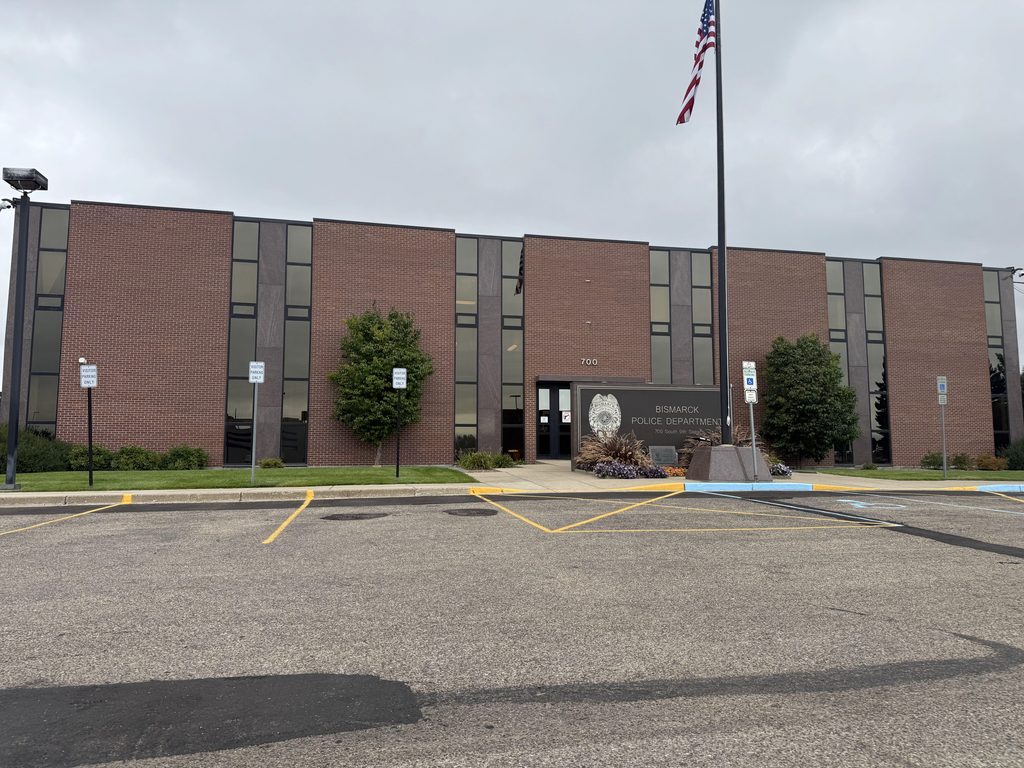
BISMARCK, N.D. — Bismarck Police Chief Jason Stugelmeyer sat down with 701 Report for an on-camera interview to answer questions about Flock Safety cameras, license plate readers, and the concerns residents have raised since this outlet’s earlier reporting. Stugelmeyer has been with BPD for 26 years and became chief just over a year ago.
How the funding actually works
BPD pays nothing for its Flock access, confirming what this outlet reported previously. Stugelmeyer said the department doesn’t own any camera, and neither the local business hosting it nor Flock itself charges BPD anything.
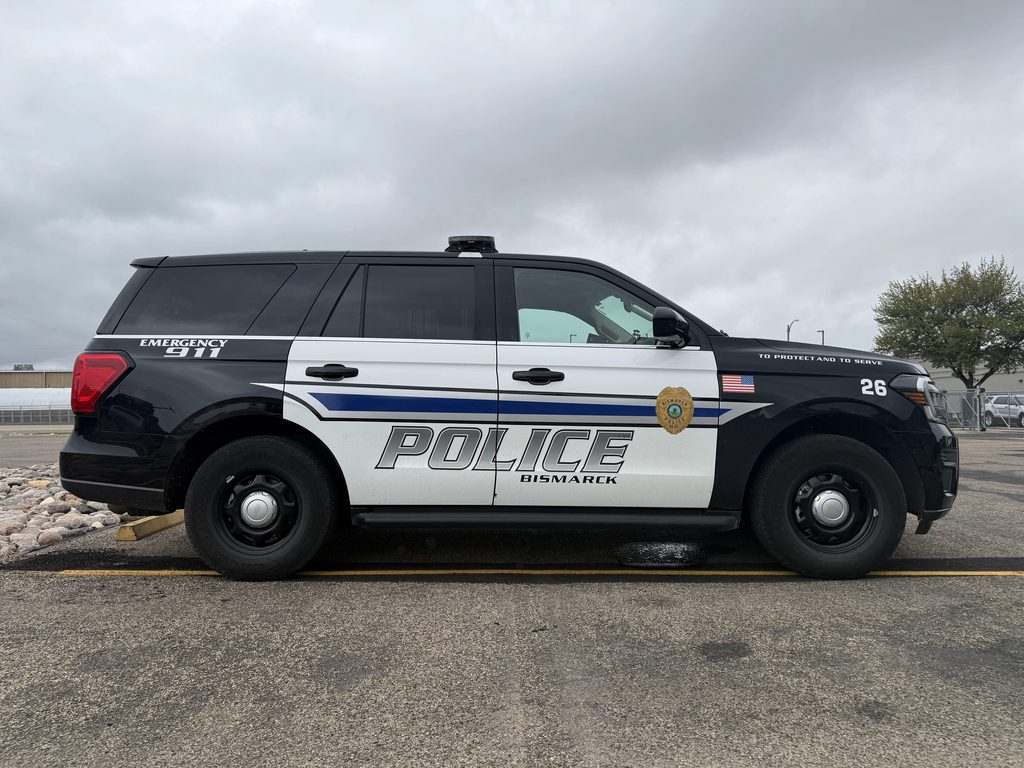
The cruiser-mounted license plate readers are a separate system entirely, and those didn’t cost extra either, at least not directly. BPD’s dash-camera and body-camera systems already run through Axon, and Axon’s ALPR feature came bundled into that existing package. “It’s the same camera that’s recording officers’ in-car video,” Stugelmeyer said. Before that, BPD used a Motorola-based ALPR system beginning around 2019, on a smaller number of vehicles.
Clarifying an earlier answer
Stugelmeyer told 701 Report BPD has a four-page written ALPR policy, a detail that adds context to an earlier written answer from Lt. Luke Gardiner, who told this outlet no policy specific to Flock queries currently existed. Gardiner, who was present for the interview, offered to send over the written policy afterward. 701 Report will publish it once received.
Regardless of which document governs it, Stugelmeyer was clear on the substance: any search requires a documented criminal reason, a “criminal predicate,” before an officer can use the system, with a case number entered when one exists. He said he’s not aware of any misuse in the six or seven years BPD has had access to this kind of technology.
What this has actually been used for
Stugelmeyer offered specific examples rather than speaking only in generalities. In one case, investigators used ALPR data to locate a sex-offense suspect who wasn’t living at the address on file with his driver’s license, by tracking where his vehicle had actually been. In a homicide investigation, the system helped locate people connected to the case who were difficult to find through other means. In another case, investigators used historical ALPR data to disprove a suspect’s alibi, matching a distinctive part on his truck to a scan taken months earlier.
“It’s a tool. You don’t just scan a plate and all of a sudden it solves the case.”Chief Jason Stugelmeyer
Retention cut in half
BPD recently reduced its Flock data retention window from a full year to 90 days, according to Stugelmeyer. He noted North Dakota has no state law mandating deletion after a set period, something he expects could come up during this year’s legislative session.
Scope: Bismarck-only, not a nationwide network
Records BPD provided to this outlet show search entries with a “networks searched” count higher than one, with some results tied to warrants in other states and federal agencies. Stugelmeyer said BPD’s access is limited to its one local system, and that sharing data with another agency, he used Fargo as a hypothetical, would require a separate agreement for each individual agency, not automatic wider access. That’s consistent with a more mundane explanation: an out-of-state warrant hit likely reflects a check against national criminal databases, not a Flock camera in that state.
Who actually pays for these cameras
A question this outlet has heard repeatedly since our first report: if BPD doesn’t pay for any of this, who does?
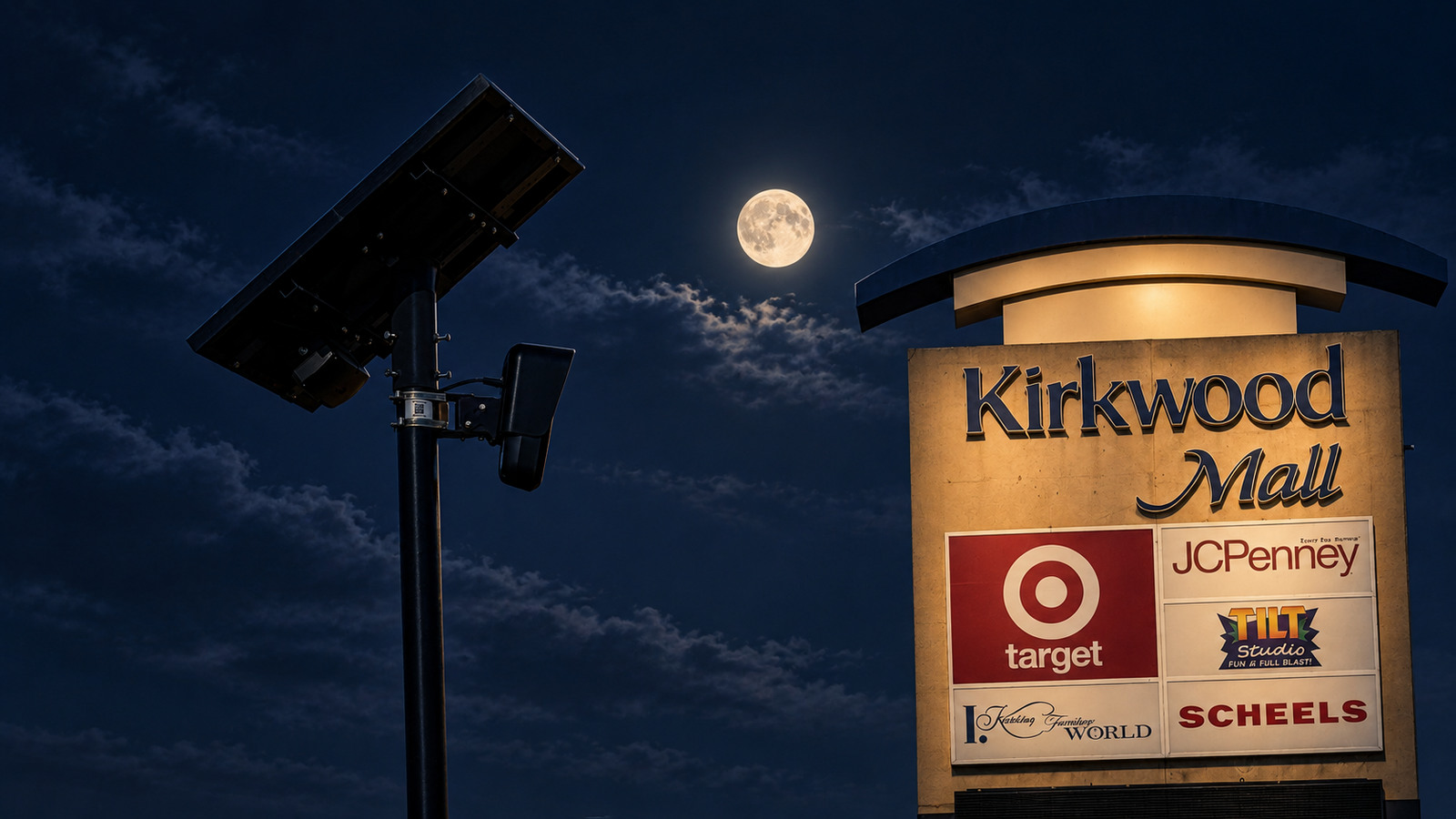
Stugelmeyer confirmed what he described as commonly known locally: the cameras near Kirkwood Mall belongs to Scheels, the sporting goods retailer. Businesses like Scheels purchase and install Flock cameras themselves, typically for their own loss-prevention and security purposes, tracking vehicles involved in theft or trespassing on their property. Scheels pays Flock directly for its own system; BPD pays nothing.
Stugelmeyer said BPD does not have access to the separate camera near Pinehurst Square/Lowe’s, which this outlet identified during an earlier field visit. That camera appears to follow the same basic model: privately purchased and operated, most likely for the property’s own loss-prevention purposes, with no indication BPD has any relationship to it.
In short: no camera in this story is bought or paid for by Bismarck taxpayers through BPD. The businesses hosting them cover that cost themselves, primarily to protect their own property.

Vendor accountability
Asked whether BPD has looked into what Axon and Flock do with department data, Stugelmeyer said Axon has been clear that the data belongs to BPD and isn’t sold or used by Axon itself. On Flock, his answer was less certain.
“I don’t know. I had heard they did [sell data], and that’s probably where this all started from. I’m sure they ceased doing that.”Chief Jason Stugelmeyer, on Flock
It’s worth noting Stugelmeyer wasn’t the one who signed BPD’s agreement with Flock, that was his predecessor, former Chief Dave Draovitch, in February 2024, before Stugelmeyer took over roughly a year ago. Off camera, once the formal interview wrapped, Stugelmeyer spoke more candidly along similar lines, reinforcing that his familiarity with Axon’s practices runs considerably deeper than his familiarity with Flock’s. For context, 701 Report’s own review of Flock’s privacy policy found language permitting the company to share personal information with third-party advertisers, a detail that hadn’t changed as of this writing.
On whether BPD’s Flock account has ever been accessed by U.S. Immigration and Customs Enforcement, Stugelmeyer did not give a direct yes-or-no answer, saying federal agencies “have access to all the systems anyway” through existing integrations. This isn’t a confirmed answer either way.
The bigger questions
Asked directly whether BPD is building profiles on citizens who’ve never committed a crime, Stugelmeyer said no.
“There’s nothing more, nothing less to that. In order for an officer to search it, you need a criminal predicate. You need to know that there’s criminal activity happening before you can search that system.”Chief Jason Stugelmeyer
On the broader feeling that constant cameras and targeted advertising add up to something approaching a surveillance state, Stugelmeyer didn’t dismiss the concern. He described experiencing the same unease about his phone seemingly listening to conversations, calling it “absolutely concerning.” But he drew a firm line between that and ALPR technology specifically: “What we’re talking about is way more invasive. It’s listening to you, it’s knowing what you want to know and what you’re talking about. That’s scary to me too.” He said BPD has built in the guardrails it believes are necessary to prevent misuse.
Asked what he’d say to residents who don’t want their plate scanned under any circumstances, Stugelmeyer compared it to an officer manually writing down license plates on a public street, technically legal and something any private citizen could do as well. He said residents who disagree have the right to petition their government, and that anyone with that concern is welcome to reach out to the department directly.
Asked whether he could envision the technology evolving toward predicting or preventing crimes before they happen, Stugelmeyer didn’t have a clear example beyond retail loss-prevention, where a flagged plate re-entering a property could alert store security. “I wish there would be more technology to prevent crime,” he said, “but it’s hard to do.”
A comparison to Fargo
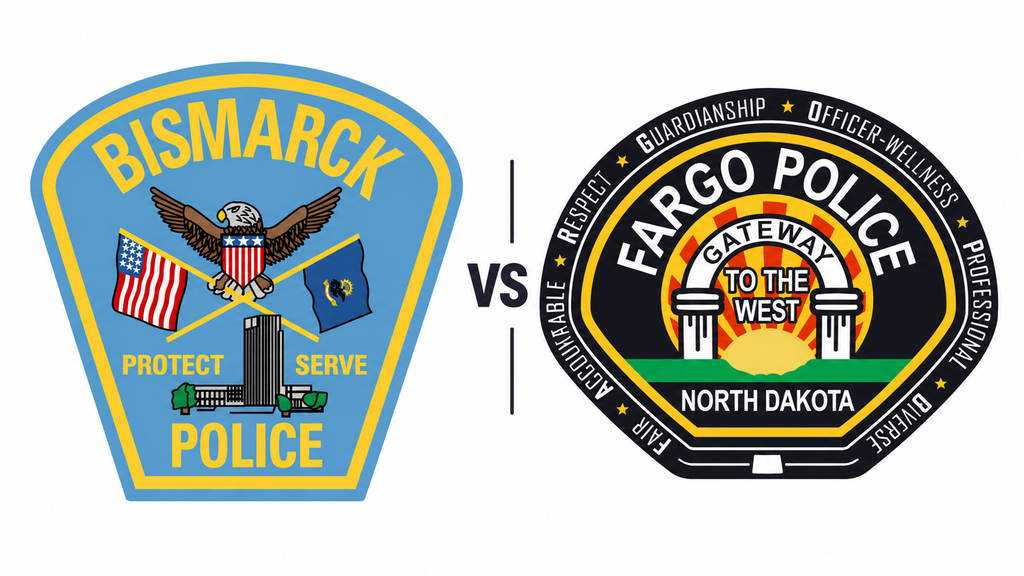
Told about Fargo’s public transparency portal for its Flock program, camera counts, policy documents, and audit logs, all publicly viewable, Stugelmeyer said BPD has discussed it but was skeptical it would meaningfully address public concerns. “I just don’t think it would alleviate the concerns,” he said, though he added the department would consider it if residents felt otherwise.
Stugelmeyer also mentioned he understood Fargo was moving toward Axon’s system, though he didn’t present this as something he’d looked into closely. For context, 701 Report’s own research indicates Fargo currently uses Flock and recently launched a transparency portal specifically for that program.
A different technology: facial recognition
This outlet also asked Stugelmeyer about a recent, unrelated case out of Fargo involving a wrongful arrest tied to facial recognition software, a different technology from the ALPR systems covered in this story. Stugelmeyer was careful to draw that distinction and said he intentionally didn’t look into the specifics of the Fargo case, since it involved a separate department.
BPD doesn’t operate its own facial recognition system, according to Stugelmeyer, but officers can request access through the state in certain investigations. He said the case elsewhere prompted a conversation with his own investigators about how facial recognition should be used.
“It should be used as a tool, not like, okay, you got a picture of somebody, now they’re arrestable. There has to be information leading to why that person is the suspect, and that person was in fact there at that point in time where the picture was taken.”Chief Jason Stugelmeyer
He said BPD doesn’t use facial recognition often, but that it has aided certain investigations.
One more system: parking enforcement
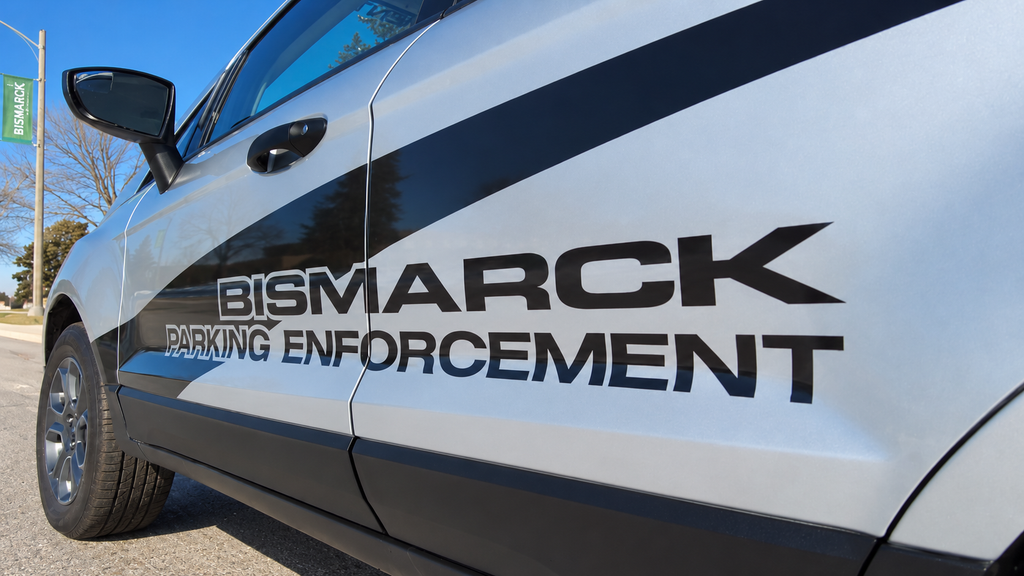
Stugelmeyer volunteered, unprompted, that BPD’s parking enforcement division still uses the older Motorola ALPR system, tied directly into its ticketing process. The system automatically flags how long a vehicle has been parked in a monitored spot rather than requiring an officer to manually chalk a tire. Parking enforcement staff are not sworn officers and don’t have access to NCIC or the broader search capabilities available to police, according to Stugelmeyer.
A candid moment
Near the end of the conversation, discussing the potential for misuse, Stugelmeyer referenced real cases nationally of officers using similar systems to track former partners.
“If somebody mishandled this in our department, and I find out about it, it’s not going to be good. I can’t even fathom anybody doing it in this department. Now I’ve heard across the country that, like, somebody stalking an ex, there’s been several cases.”Chief Jason Stugelmeyer
After the formal interview, the conversation continued informally. Asked what he’d do if an officer in his own department were caught misusing the system, Stugelmeyer didn’t offer a rehearsed answer, acknowledging he wasn’t certain how that would play out, while reiterating he couldn’t imagine it happening under his watch. He also confirmed BPD’s Flock access remains limited to Bismarck, with any data-sharing arrangement with another agency requiring a separate agreement rather than automatic access.
This is the third piece in 701 Report’s ongoing coverage of Flock and license plate reader technology in Bismarck, following an initial explainer on where these cameras are located and a follow-up detailing BPD’s confirmed access. More coverage, including video from this interview, is ongoing.


Leave a Reply