
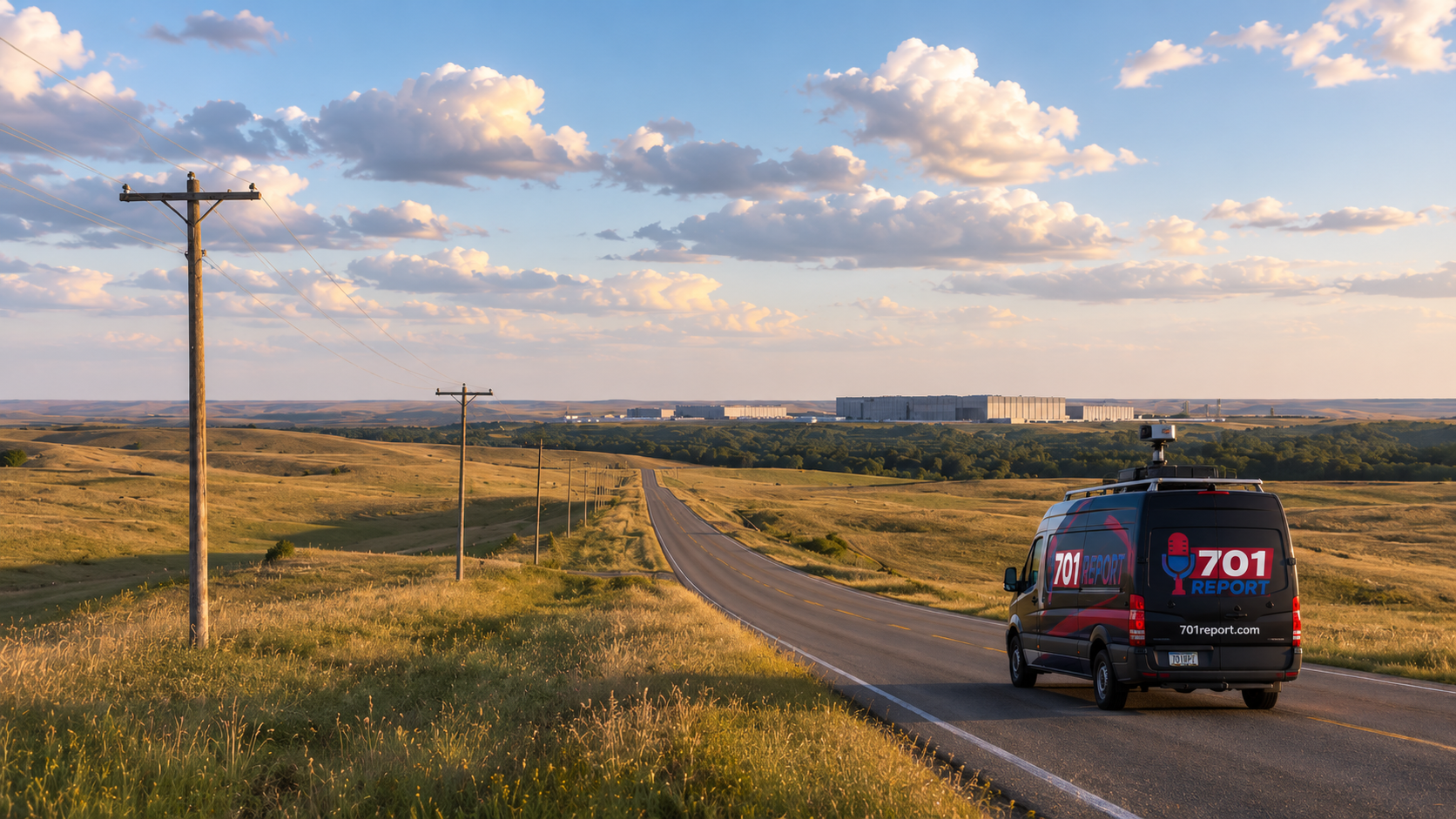
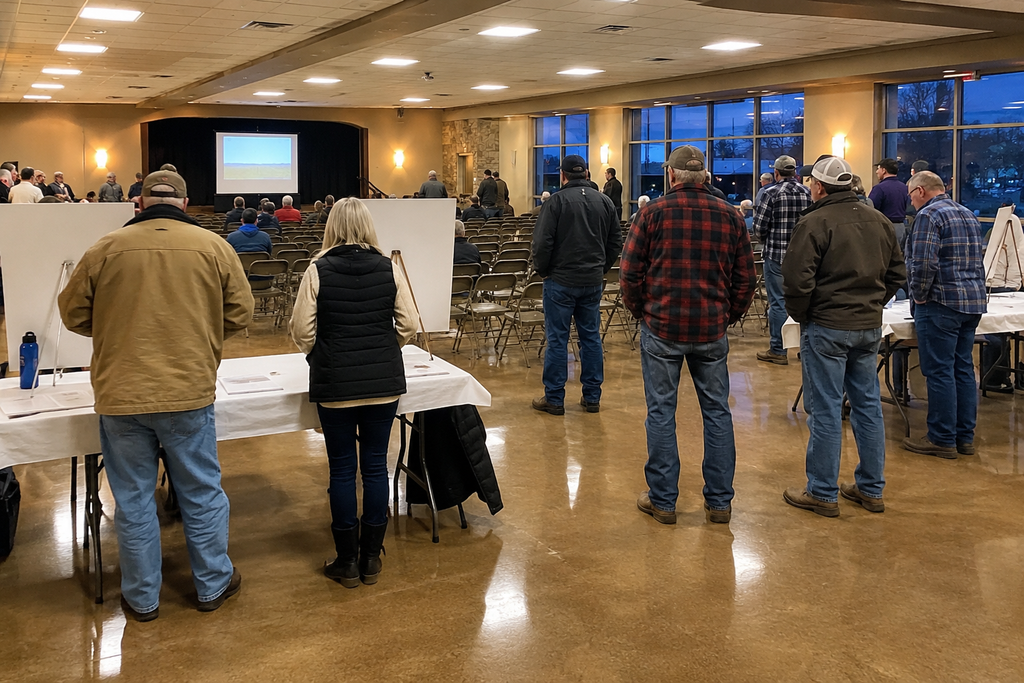
MANDAN — Hundreds of people packed Mandan’s Signature Events Center on Aug. 20 to ask Stark Power, a company most had never heard of a month earlier, about a data center and gas plant proposed a few miles from three city schools.
The project is still in the planning stage, no zoning application has been filed, but the site appears set: land north of Interstate 94, between Highway 1806 and Old Red Trail. What Mandan decides in the coming weeks about its data center ordinance will shape whether, and how, this project moves forward.
Key facts
- What: Stark Power has proposed a data center and co-located natural gas power plant north of Mandan.
- When: Public open house held Aug. 20, 2026; Mandan Planning and Zoning Commission reviews the city’s data center ordinance Aug. 24.
- Who decides: Mandan Planning and Zoning Commission and City Commission, plus Morton County’s own zoning process.
- What’s next: No zoning application is filed yet. Stark Power says it’s waiting for the city and county ordinances to be finalized before applying.

What Stark Power is proposing
Stark Power is an Israeli-listed infrastructure developer that entered North Dakota’s data center market in June 2026, when it acquired Sagebrush Infrastructure Partners. Sagebrush had already signed purchase agreements with three Morton County landowners for the Mandan-area site. The proposal pairs a large-scale data center with its own natural gas generation, designed to run largely independent of the regional grid.
According to the project’s own website, mandandc.com, Stark Power estimates the project would generate roughly 1,000 construction jobs and about 150 permanent positions once operational, along with $40 million to $50 million a year in combined economic benefit to Mandan’s public schools, the city and Morton County. The company says it would fund its own generation, transmission and water infrastructure.
Those figures are the company’s own projections. No development agreement, tax abatement request or binding dollar commitment has been filed publicly as of this writing.
What residents are asking
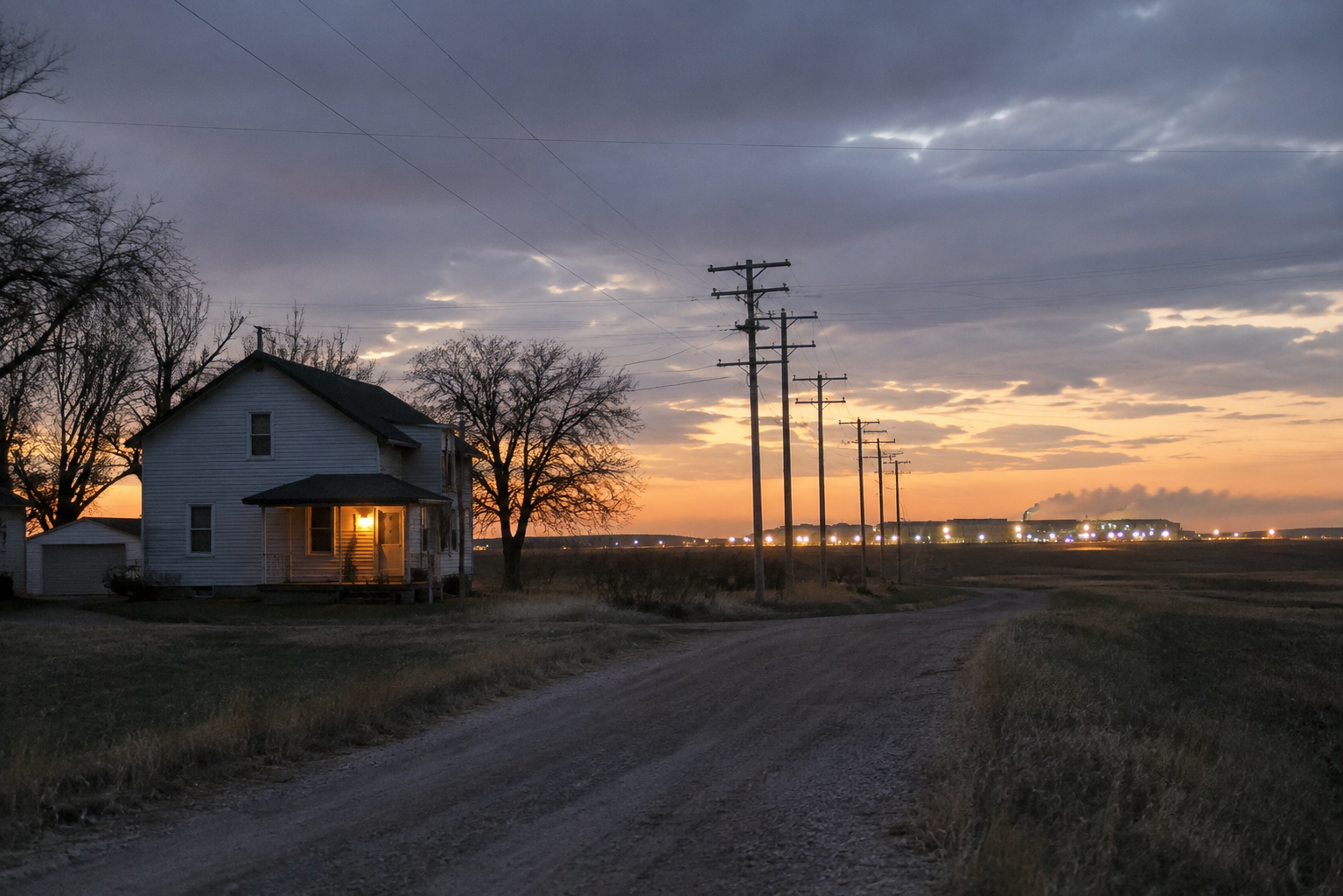
Concerns raised at the Aug. 20 open house centered on the site’s proximity to Red Trail Elementary, Mandan Middle School and Mandan High School, potential noise from a facility designed to run continuously, and who pays for infrastructure if the project stalls.
“We have sunshine. We have quiet. We have a river that’s clean, and all of these things are going to affect us.”
Terry Mastel, Mandan resident living near the proposed site
Lee Fleischer, also of Mandan, said he wants upfront funding to cover city and county infrastructure costs if the project falls through, plus a fully funded decommissioning plan before construction starts, not estimated benefit ranges. Blaine Engelstad said he doesn’t oppose data centers generally but doesn’t want this one built next to a residential area, suggesting reclaimed industrial land as an alternative.
Stark Power says it is taking steps to address some of these concerns: locating mechanical equipment toward the center of the site, using sound-dampening materials and engineered sound walls, and building a closed-loop, air-cooled system it says avoids the water volumes associated with evaporative cooling. The company also says it will not use nondisclosure agreements with the city.
Why there’s no application yet
“We want to give the city and the community time to be thoughtful and deliberate about the things that are important to them and make sure those are reflected in the ordinance.”
Michael Wahlen, managing director of digital infrastructure, Stark Power
Wahlen said Stark Power will move forward with a project application only once it determines the finalized ordinance is workable. That leaves the ordinance, still under review as of this writing, as the document that will actually decide what a Mandan data center project can and can’t do.

How Mandan fits a statewide pattern
Mandan is the newest entry in a wave of large data center proposals moving through North Dakota, each at a different stage of the same negotiation between developers and host communities.
Center / Oliver County: Applied Digital, the Dallas-based company behind North Dakota’s largest data center buildout, is further along here than Stark Power is in Mandan. The company has submitted a rezoning application for “Polaris Forge 3,” proposed south of Hanover near Highways 25 and 31, and in July signed a road-use agreement with Oliver County covering construction access. Montana-Dakota Utilities has an electric service agreement in place for up to 430 megawatts. Applied Digital projects roughly 200 permanent jobs and about 1,000 construction jobs, company estimates, not verified outcomes. Oliver County commissioners imposed a 180-day moratorium on new data center development in spring 2026 while writing siting rules; whether that moratorium is still active, and whether the county has acted on the rezoning request, is unconfirmed as of this writing.
Ellendale: This is the one North Dakota community where a data center has moved from proposal to years of lived reality, and the record is mixed. Applied Digital’s Polaris Forge 1 campus, roughly $11 billion of investment building toward 400-plus megawatts, has driven Ellendale’s sales tax collections from about $400,000 a year to a reported $3.5 million in the first seven months of 2026, funding street repaving and other projects Mayor Don Flaherty says had been deferred for years. Montana-Dakota Utilities customers in the area have reportedly seen electric bills drop by roughly $250 a year under state cost-sharing rules. At the same time, more than 1,000 construction workers have been living in nearby Aberdeen, S.D., because Ellendale couldn’t absorb them, and local rents have reportedly climbed from around $600 to more than $1,200 a month for a one-bedroom.
“Could it blow up in my face? Absolutely.”
Don Flaherty, Ellendale mayor, on the town’s financial dependence on Applied Digital
Stark Power and Applied Digital are separate companies pursuing separate projects, with different designs, power arrangements and community agreements. Mandan’s proposal is not a preview of exactly what Center or Ellendale experienced.
What 701 Report is investigating next
As North Dakota markets itself as a landing spot for gigawatt-scale AI infrastructure, local governments, school districts and residents are being asked what they gain, and what they’re agreeing to risk. That question doesn’t have a settled answer yet in Mandan or anywhere else in the state. 701 Report is opening a broader investigation into North Dakota’s data center expansion, starting with questions that deserve documented answers rather than estimates from either side.
- How are the economic-benefit figures companies cite actually calculated, and by whom?
- How much tax revenue reaches local governments and school districts once a project is operational, versus what’s projected before construction?
- How many promised jobs are permanent, local hires, not construction-phase positions that leave with the crews?
- Who is contractually responsible for new electrical, road and water infrastructure if a project stalls?
- Could non-data-center electric customers see costs shift onto them, or benefit from cost-sharing?
- How much water do these facilities use in practice, not in design specifications?
- What does an operating facility actually sound like to the nearest homes?
- What happens to housing costs, traffic, road wear and emergency-service demand once crews and staff arrive?
- What safeguards, decommissioning funds, bonding requirements, exist if a facility is scaled back or shut down?
- Do Ellendale’s outcomes, five years in, support or undercut the specific claims now being made in Mandan and Center?
701 Report has not concluded that these projects are good or bad for the communities involved. Over the coming months, we intend to pursue public records, government agreements, and interviews with residents and officials in all three communities, and compare what’s promised in Mandan and Center against what’s actually happened in Ellendale.
The documents
Read the source material
What happens next
The Mandan Planning and Zoning Commission reviews the city’s data center ordinance Aug. 24, followed by the Morton County commission shortly after. Stark Power has not filed a project application and says it won’t until the ordinance is finalized.
Have information about data center development in North Dakota? Email editor@701report.com.


Leave a Reply